


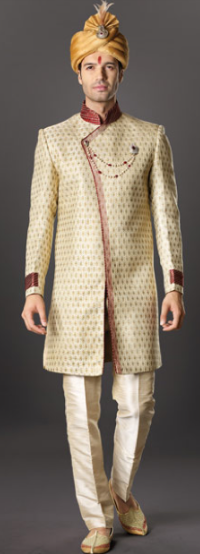

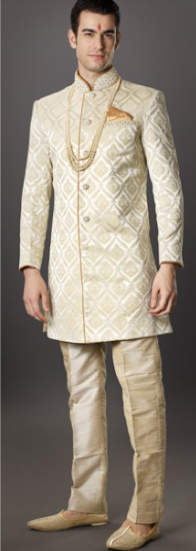
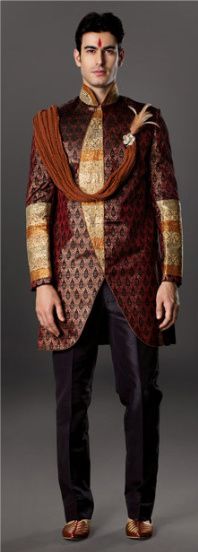
PHOTO CREDIT: UTSAV FASHION
I think I’ve mentioned “wedding” and “Mrs” a bit too frequently the last couple of days – no I’m not marrying my girlfriend (not yet anyway). Actually, my uncle is getting married in less then two weeks, and it will be cause of lots of fanfare, reunions, outfits, traditions and general revelry. As such, there is much anticipation and preparation the days following the big event. But first, a very brief and general history/culture lesson for all of you is provided below, based on my biased upbringing in Islamic Pakistan. Please hover your mouse over terms in quotations for a more adequate description.
Traditionally, most marriages in Hindustan (the nation state combining Pakistan, India and Bangladesh before they each gained independence in 1947) were arranged by the parents of the bride and groom, who were both usually from differing villages, and as such, much of the traditions that go along with Indian weddings (or ‘Shaadis’) involve a great distinction between the bride’s family and the groom’s family, and go on for several days, to accommodate for the slow travel in those times. For the most part, these traditions still live on to this day.
Since Independence (which was based mostly on religious grounds), the Muslims occupied Pakistan, leaving the Hindus (and Sikhs) in India. This means that while Pakistanis and Indians identify with two distinct countries and two distinct cultures, their roots and ideologies are extremely similar, with only marked differences in religious practices.
This upcoming wedding has been interesting because it involves the Christian-Pakistani traditions of the groom’s side (that’s me!) and the Sikh-Converted-to-Christian-Indian traditions of the bride’s side. As such, there has been a massive conglomerate of behaviors, perceptions and socially-constructed norms regarding this wedding. To break it down for you, Thursday night is the ‘dholki’: where the last minute preparations occur, the bride gets her henna done, the groom gets prayed for. Friday night is the ‘mehindi’: this is symbolically when the ‘barat’ (the groom’s procession from his village) arrives at the village/house of the bride. Traditionally, the bride wears no make-up at this event, and the crowd dresses in yellow and green. On Saturday morning is the actual wedding ceremony (called the ‘nikkah’) – for this wedding, it will involve the white dress, tuxedo, limo, church bells and the whole shebang, because we are Christians. Following that is the reception – the grand celebration where the bride will be changing outfits into traditional garb.
With that context, you can understand the perceived importance that we felt in choosing outfits for each of these four events, all with starkly differing standards. The ‘mehnindi’ outfit has to be a certain style, color, fabric. The church ceremony left all doors open to runway dresses and white gloves. The ‘wedding reception’, in our culture, is the quintessential postmodern space for brown people to pull out all the stops – heavily and intricately embroided ‘sarees’, 24-karat gold jewelery sets, ornate headpieces, full henna on feet and hands, etc etc. The Indian-Wedding outfits of today combine traditional patterns and fabrications with more Western influences, like the pocket square and driving shoe (pictured above). More and more frequently, sleeveless blouses and more form-fitting ‘lehengas’ are making appearances on the Indian runway, and inside the banquet halls of Indian festivities. So being the multicultural, fashionable, and young couple that we are perceived to be, the pressure was on! B and I have spent months brainstorming what to wear, and have spent a considerable amount of time and money constructing our looks for these events – a delicate balance between classical Indian wear and contemporary runway fashion. I am so excited for the last weekend in November – which also happens to be B’s best friend’s birthday party and my company Christmas party (but more on that later).

———————————————